
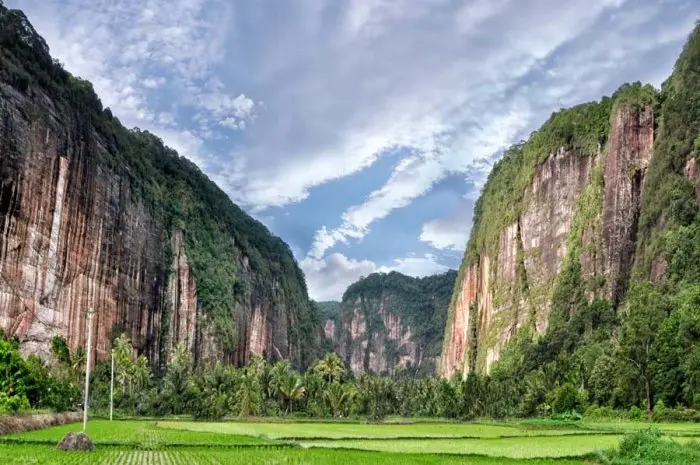
Nestled in the heart of West Sumatra, Indonesia, lies a hidden gem of unparalleled beauty and tranquility – the Harau Valley. Renowned for its dramatic limestone cliffs, lush greenery, and cascading waterfalls, Harau Valley is a natural wonderland that captivates visitors with its breathtaking landscapes and rich biodiversity.
In this comprehensive guide, we embark on a journey to explore the enchanting allure of Harau Valley, uncovering its natural wonders, cultural heritage, and eco-tourism opportunities that make it a must-visit destination for nature lovers and adventure seekers alike.
1. Geological Marvels
Harau Valley is characterized by its towering limestone cliffs, which soar hundreds of meters into the sky, creating a dramatic backdrop of rugged beauty. These limestone formations, sculpted over millions of years by the forces of nature, are a testament to the geological wonders of the region.
Visitors to Harau Valley can marvel at the sheer magnitude of these cliffs, which are adorned with lush vegetation and punctuated by caves, crevices, and rock formations of mesmerizing shapes and sizes.
2. Breathtaking Waterfalls
One of the highlights of Harau Valley is its stunning waterfalls, which cascade gracefully down the limestone cliffs, creating a symphony of sight and sound that delights the senses.
From the iconic Lembah Harau Waterfall, which plunges into a natural pool below, to the secluded Batu Hampar Waterfall, hidden amidst the jungle, each waterfall in Harau Valley offers its own unique charm and allure.
Visitors can hike along scenic trails that wind through the valley, discovering hidden waterfalls and panoramic viewpoints along the way, or simply relax and soak in the beauty of these natural wonders from a distance.
3. Rich Biodiversity
Harau Valley is home to a diverse array of flora and fauna, making it a paradise for nature enthusiasts and wildlife lovers. The valley’s lush forests are teeming with endemic plant species, including rare orchids, ferns, and mosses, while its rivers and streams support a variety of aquatic life, including fish, frogs, and freshwater crabs.
Birdwatchers will also delight in the opportunity to spot a wide range of avian species, including hornbills, kingfishers, and sunbirds, which inhabit the valley’s forests and wetlands.
4. Cultural Heritage
In addition to its natural beauty, Harau Valley is also rich in cultural heritage, with a history that dates back centuries. The valley is home to several traditional Minangkabau villages, where visitors can experience the unique customs, traditions, and way of life of the local community.
From the distinctive architecture of the traditional rumah gadang (Minangkabau houses) to the vibrant arts and crafts of the region, Harau Valley offers a fascinating glimpse into the rich cultural tapestry of West Sumatra.
5. Eco-Tourism Opportunities
As a designated eco-tourism destination, Harau Valley offers a range of sustainable tourism activities and initiatives aimed at preserving its natural beauty and supporting the local community.
Visitors can participate in guided hikes, birdwatching tours, and cultural excursions led by knowledgeable local guides, who share their expertise and insights into the valley’s ecology, culture, and history.
Additionally, eco-friendly accommodations and responsible tourism practices ensure that visitors can enjoy the beauty of Harau Valley while minimizing their environmental impact and contributing to the preservation of this precious natural resource.
Conclusion
Harau Valley is a hidden gem waiting to be discovered by travelers seeking adventure, tranquility, and natural beauty in the heart of West Sumatra.
From its dramatic limestone cliffs and cascading waterfalls to its rich biodiversity and cultural heritage, the valley offers a wealth of attractions and experiences that appeal to nature lovers, adventure seekers, and cultural enthusiasts alike.
Whether you’re hiking through the jungle, swimming beneath a waterfall, or immersing yourself in the local culture, Sibea Bea promises an unforgettable journey filled with wonder, discovery, and the warm hospitality of West Sumatra’s welcoming community.

